Personal experiences - Somatic Movement and managing long COVID and mental health issues
These ‘personal experiences’ blog posts are designed to give the reader an insight into just a few of the many different kinds of people who practise Somatic Movement - as well as the sorts of issues the practice can help with. Search the ‘personal experiences’ tag for more - I hope you enjoy them!
Although many people come to Somatic Movement to help manage chronic pain issues, reducing or resolving pain is far from the only area Somatics can help us with.
I’d like to introduce you to David. David is 60, and was introduced to Somatic Movement some months ago, by his wife Maria, a seasoned student of the approach.
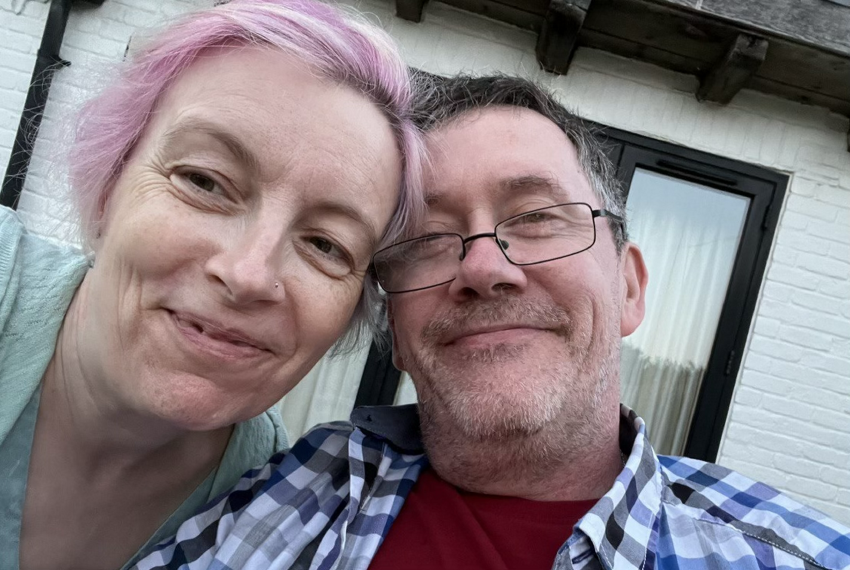
Here, David tells us a little about his experience with movement practices, and living in his unique soma (his living body as he experiences it), which has included long covid and mental health issues in recent years.
“I have previously done karate, and moved to Tai Chi following Covid. I have therefore been at least aware of the importance (and challenge) of controlling my whole body; the importance of attaining balance; and the value of strengthening my core. I had also learned to isolate and move specific areas within my body. However I have also been aware of tension, tightness and stresses within my body which these [practices] have not always been able to rectify.”
I think many of us will resonate with having existing movement practices, and noticing through these, or just in our day-to-day activities, that there is tension within the system of the body that we can’t seem to resolve. In Somatic Movement we think of this difficult-to-tackle tension in terms of habitually held contraction in the muscles. In other words, the brain has become so used to a certain level of contraction in the muscles, that it holds onto it below the level of our conscious awareness - as a habit - and has forgotten how to tell the muscles to stop contracting. We call this sensory-motor amnesia (SMA), and we use the practice of pandiculation to regain conscious awareness and control of the muscles, so that we can lower the resting level of contraction that they hold, thereby releasing the tension.
David talks about starting out with Somatic Movement: “My wife Maria has sung its praises as being an impactless [as in, non-impact - as opposed to high- or low-impact exercise, for example] way to work on areas of the body, and thereby helping to reduce tension and stresses overall. I found it liberating, physically and emotionally uplifting and a perfect complement to the Tai Chi that I also enjoy. I found the concept and practice of pandiculation to work at once, and the way that Emilie focussed it on specific areas immediately made perfect sense.”
Pandiculation is a 3-step process, in which you contract muscles a bit more than they are already contracted, release the contraction slowly and with awareness, and then rest to integrate. The movements are done slowly so that you can become more aware of the sensation of contraction and release, so that you bring the action to your conscious awareness. Everything is done within each person’s individual comfort level, so movements can be as small and gentle as you need, until you’re ready for more. You can watch a video to find out more about pandiculation here, if you wish to.
“Attending classes online is a perfect way to develop Somatic skills and knowledge. We go through exercises that focus on different areas of the body, and invariably leave me feeling more relaxed - but also more energised - than when I started. Practicing is simple: I can either revisit exercises done in class on my own, or I can pick from the (extensive) library of recordings and tutorials that Emilie has established and curates on line. It is always a pleasure working with Emilie. She is great fun - but really focussed - in the classes, and is also very active and quick to respond on the group WhatsApp account.”
It’s not for everyone, but yes, we have a private WhatsApp group which is available to all of our Somatic Movement members. Maybe once upon a time this would have been a Facebook group - but more and more I think people are looking for real connection, and whilst imperfect, our WhatsApp group brings a real sense of community and connection, which I think can be so often missing from this sort of work. Yes, there are those who just want to turn up to class, do the work, and then forget about it for the week - and we fully support and honour this if this is someone’s path. And… for those who wish to take things a bit deeper, to connect with other people doing the work, to share and to support - to find real community - this is something we’re proud to be able to bring to the work, here in Restore Movement.
Back to David… He has noticed a number of benefits through his Somatic Movement practice. He explains that it relaxes specific areas of his body, helps him strengthen specific muscles, aids in his ability to control the movement of specific parts of his body, helps connect his mind and body, and relaxes his mind and mood.
In Somatic Movement, we use check-ins before and after our sessions, to notice any areas of tension or discomfort and then to bring to the conscious mind how things have changed after our practice. During the sessions, movements are selected to target specific areas of the soma, or particular patterns of tension that might show up for individuals. David has found the check-ins and the targeted movements help him to bring relief to different parts of his soma. He describes how sometimes this relief affects a broad area, such as his lower back, shoulders, hips, neck etc - but also how he has found relief from specific issues such as foot cramp, or a specific sore muscle. In his own words, he says that Somatic Movement, “is not a panacea, but it is the most effective method I’ve found for addressing these issues. In addition, it has the head/mind calming benefits often associated with other practices such as Tai Chi and yoga”.
David has also found that Somatic Movement supports him in his day-to-day life. For example, like many of us, David spends time working at his computer, and describes how Somatics has improved his ability to work more easily, less painfully, and, crucially, more creatively, at his computer. It’s very difficult to concentrate and work effectively when we are in pain or discomfort. Somatic Movement helps us not only to notice when we are starting to stiffen up, but also to actively take steps to do something about it. Not only that, but the practice helps us maintain a more comfortable posture as we sit in relative stillness - so that when we do get up and move, we’re in a better place to begin with. It is very heartening to hear stories like David’s, around comfort at the computer, since it is a place that so many of us these days spend a good chunk of our time.
But it’s not only improved comfort at the computer that David calls out, in terms of how Somatic Movement affects him. He describes Somatics as a “very low impact, generally comfortable activity which can dramatically improve movement, reduce the incidence of pain and help your balance of mind”. When you are managing mental health issues, finding ways to bring release and relief to the system in gentle, accessible, adaptable ways is vital; and this is what Somatic Movement can bring us.
I have also loved hearing some of David’s thoughts that he would like to share with everyone reading, to reassure and encourage anyone thinking of trying Somatic Movement. I wonder if any of his thoughts resonate with you - or are something you would like to experience yourself?
-
“One of the great things about Somatics is that you are not judged, and you are not competing. You can find your own way in each class, with the teacher leading you towards an end goal, but not pushing you to outdo others, or reach beyond what you feel is comfortable at that specific time.”
-
“Martial arts and even yoga will, by their nature, sometimes encourage you towards stretches (either of the mind or the body) which can occasionally feel excessive, and sometimes even hurt - Somatics does not do this. If an exercise appears as though it might be painful or create real strain then you can work around this so that it simply does not happen.”
-
“You can use it to help reduce stress and create clear head space. And you can practice it virtually anywhere to help regulate your physical and emotional responses. I have used it while travelling on the tube, while recording music and while preparing to go on stage, while cooking, and even (very carefully!) while driving*.”
I hope hearing about David’s experiences here has inspired or intrigued you. If you’re new here, and you want to start to understand a little more about what we actually do in Somatic Movement (and how it’s different from other, more well known movement practices), you can find out a little more about what it is and how to get started in my ‘Beginner’s guide’ blog post. Or you can get in touch with me at Restore Movement to ask questions and find out more. In the meantime, I want to give David the last word on a hugely practical, and very uplifting benefit of Somatic Movement, for those of us managing mental health issues - may we all find increased ease and comfort in our lives moving forwards.
“A good personal example of how Somatics has helped me is: I regularly present music I have created in a “live” environment; I also suffer intermittently from depression and anxiety (which can be a very difficult combination combined with live presentation). I have tried all of the usual techniques - controlled breathing, self visualisation etc - but I have found that by carrying out Somatics basics while waiting to go on has been very helpful as it focuses on both mind and body coming back under your control. After that stepping out in front of people and awaiting their sometimes visceral response becomes significantly easier.”
A big thank you to David for sharing his thoughts and experiences here. You can find out more about David’s work around music and mental health here.
*I obviously can’t recommend doing Somatic Movement whilst driving :-)
Emilie Leeks
AuthorEmilie is a heart-centred life mentor and space holder, supporting those on a healing path. This is not an easy journey, and often we can find ourselves losing our way. Emilie's work meets you where you're at, with beautiful, accepting support and connection, and weaves that support with practices and explorations in self-compassion, body connection, and a return to a deep trust in ourselves. Note: all blog post content which refers to them, has been read and agreed to by Emilie's children.
View All Posts